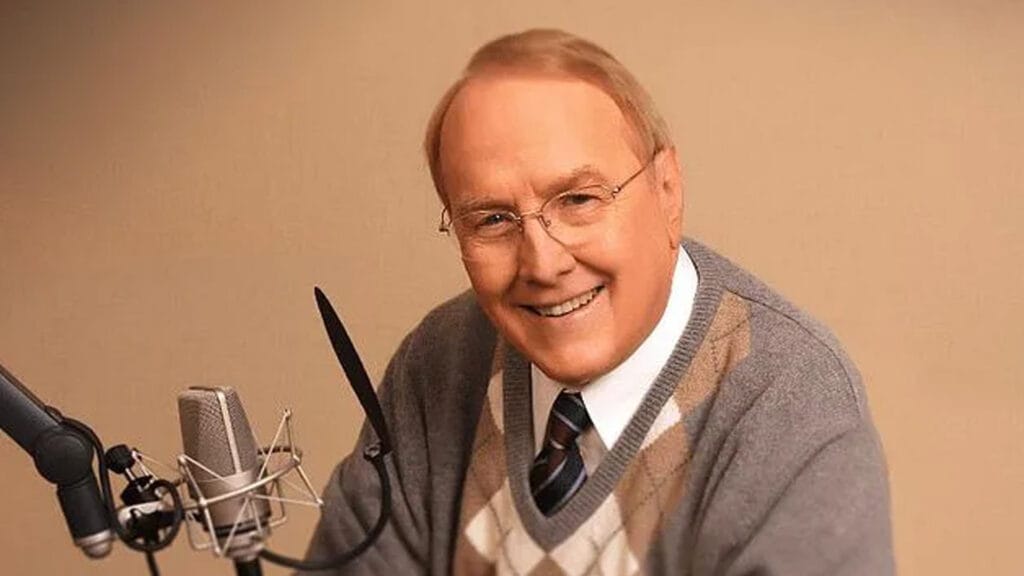
I had the honor of knowing Dr. James Dobson. He was a dear friend, and I had the privilege of speaking on his broadcast several times and at his annual Gathering conferences. The time I spent with him has had a tremendous impact on my life. At his urging, I founded ProLifeDoc.org, and during one of our interviews, we coined the motto for my ministry: “A Patient Is a Person, No Matter How Small.” He poured into me and forever changed my life!
What’s incredible is that he has done this for hundreds of millions of people through his radio broadcasts, speaking engagements, books, and personal contact. Throughout the 1980s and 1990s, his influence was immense and continues to this day. So please allow me to honor the impact he had on our nation.
In every generation, a few men and women ascend above the clamor of their age to speak truth rooted in conscience. They do not merely critique their culture—they seek to redeem it. For those who value the sanctity of human life, few modern figures better embody that calling than Dr. James Dobson, who was a guiding voice of the Christian pro-life movement for nearly half a century.
Dr. Dobson’s work, much like that of William Wilberforce two centuries before him, gives testimony to how faith, persistence, and moral clarity can reshape a nation. Wilberforce spent decades battling the slave trade; Dr. Dobson spent decades defending the lives of the unborn. Both men faced fierce opposition and worked through cultural and political structures they did not control. Each saw remarkable fruit from his labor—Wilberforce with the abolition of slavery in the British Empire, Dr. Dobson in laying the moral groundwork that culminated in the 2022 overturning of Roe v. Wade.
This is the story of a man who stood firm as the moral compass of a nation spun wildly, and who helped rally an entire generation to recognize the value of every human life.
The Birth of a Moral Vision
Dr. James Dobson did not begin as a political activist. Trained as a family psychologist at the University of Southern California, he first gained prominence as a clinician and author focused on the well-being of children and parents. His early books—Dare to Discipline (1970) and The Strong-Willed Child (1978)—weren’t about abortion or politics; they were about the structure of love and authority within families. Yet those same convictions about the sacred role of parents and the moral shaping of family life provided the spiritual and ethical foundation for his later pro-life advocacy.
America was undergoing radical cultural shifts in the 1960s and 1970s. The sexual revolution reshaped public morality, and the 1973 Roe v. Wade decision normalized abortion as law. Many churches were unsure how to respond, or even if they should. Into that vacuum stepped Dr. Dobson, whose growing radio ministry became a platform for reclaiming biblical values amid the moral freefall.
A Voice of Conscience Through the Airwaves
Dr. Dobson’s genius lay not in fiery rhetoric but in steady conviction. Through his daily radio broadcasts—eventually heard by hundreds of millions in the United States and abroad—he educated families about what he called the “culture of life.”
Many Christian right political figures led rallies and lobbied lawmakers. But Dr. Dobson was different. His influence was often pastoral and relational. He entered the nation’s homes through the family radio, talking about marriage, parenting, and Christian faith. Then, with gentle but clear moral logic, he connected those themes to the unborn child—arguing that a society that rejects the defenseless will soon fail to treasure any of its children.
“When a nation grows comfortable with the destruction of innocent life,” Dr. Dobson warned, “it loses its ability to cherish life at all.”
Dr. Dobson’s message was not one of condemnation but of restoration. He reminded his listeners that grace, forgiveness, and healing were always possible—but that silence in the face of injustice was not. He made abortion not simply a political issue, but a moral crisis of the human heart.
Moral Formation Over Political Partisanship
One of Dr. Dobson’s achievements that I find remarkable was his ability to maintain a moral voice that transcended politics while shaping the political landscape. Unlike many leaders of the religious right, Dr. Dobson carefully guarded his nonpartisan status. His goal was not party loyalty—it was moral renewal.
However, his efforts had profound political consequences. Millions of Christians began voting with a “pro-life first” mindset. They viewed the issue of abortion as a moral litmus test for candidates. Ronald Reagan’s campaigns in 1980 and 1984 benefited enormously from this newfound evangelical engagement.
President Reagan himself recognized Dr. Dobson’s cultural impact, often praising the family movement’s moral work. The establishment of “National Sanctity of Human Life Sunday” in 1984—observed by churches each January—was the fruit of that collaboration between the White House and the pro-life religious community that Dr. Dobson helped energize. Today, the entire month of January is Sanctity of Human Life Month, thanks mainly to the work of this one man.
Wilberforce’s Parallel: A Battle for Conscience
The similarities between Dr. Dobson and William Wilberforce are striking. Both were men of deep Christian conviction who viewed their reform work as a divine calling rather than a political crusade. Both saw moral blindness in their cultures—the slave trade in Wilberforce’s Britain, abortion in Dr. Dobson’s America—and both committed their lives to awakening conscience.
Wilberforce fought for more than 40 years against the entrenched power of slavery and the profit it generated. His arguments, grounded in Scripture and moral reason, turned the tide of British opinion. Yet for most of those decades, he was met with scorn, insults, and indifference. It took decades of long-suffering before he saw the passage of the Slave Trade Act of 1807 and, later, the Slavery Abolition Act of 1833.
Dr. Dobson’s struggle for life was no less persistent. He began speaking for the unborn when few in mainstream culture would listen. For decades, he faced criticism from the secular media and even discomfort from within some churches. Yet he never wavered. He continued using his influence to foster compassion for mothers, to support pregnancy centers, and to press lawmakers toward conscience.
Like Wilberforce, Dr. Dobson understood the battle was spiritual before it was political. Laws change when hearts change. He devoted his life to changing hearts—through education, empathy, and moral clarity.
Shaping the Pro-Life Generation
Perhaps Dr. Dobson’s most significant influence is measured not in legislative victories but in the people he motivated. Through his broadcasts, books, and public witness, he inspired a generation of pro-life leaders—pastors, activists, counselors, doctors (including me), and parents who carried the mission forward.
His influence helped organize countless pregnancy resource centers, and he gave churches the moral grounds to get involved. The language of “culture of life” became part of the Christian vocabulary, uniting Catholics and evangelicals in an unlikely alliance.
During the 1990s, when public opinion on abortion seemed immovable, and the culture often mocked pro-life values, Dr. Dobson redoubled his efforts. He encouraged Christians not to despair, reminding them that spiritual awakenings take time—sometimes generations.
“Wilberforce never lived to see every bondage broken,” Dr. Dobson once noted. “But he believed in the righteousness of his cause, and that gave him the courage to keep fighting. We must do the same.”
From Culture to Courtroom: The Fruits of Perseverance
The Supreme Court overturned Roe v. Wade in June 2022—nearly half a century after its original ruling. That decision was the culmination of years of faithful work by countless individuals and ministries. Yet it is no exaggeration to say that Dr. James Dobson helped make that moment possible.
By shaping evangelical identity, he helped produce voters who elected presidents committed to appointing constitutionalist judges. By inspiring civic engagement through moral reasoning, he ensured that life issues remained central to America’s conscience. And by emphasizing compassion over condemnation, he gave the movement a human face.
The Dobson generation of pro-family activists did what seemed impossible in the 1970s: they transformed abortion from a settled “social right” into a perennial moral debate that never left the national stage—and eventually, into a cause triumphant in the highest court.
Even after Roe’s reversal, Dr. Dobson’s message continues to resonate: the goal isn’t legal change. The desired result is a rebuilt culture that values every human life.
Faith, Family, and the Future of Life
Dr. Dobson’s work has always focused on one central idea: the family is the center of moral formation. Laws may restrain evil, but families form consciences. That belief is at the core of his life’s work.
He once said that Wilberforce’s most significant legacy wasn’t merely abolition but the moral reawakening of a nation. The same can be said of Dr. Dobson. By teaching families how to live with biblical conviction, he has advanced a quiet but profound reformation of hearts—one that fights for the sanctity of life not out of anger, but out of love.
Today, the pro-life movement faces new challenges: chemical abortions, cultural apathy, and post-Roe political struggles in various states. Yet it also faces those challenges with a more seasoned resolve, shaped by decades of moral training from leaders such as Dr. Dobson. The battle is far from over, but it has new warriors—many of them shaped indirectly by Dr. Dobson’s daily conversations over radio waves and living-room devotionals.
A Legacy of Moral Courage
It is fitting to honor Dr. James Dobson not only as a compelling moral educator but as a modern-day reformer in the tradition of Wilberforce. Both men fought different injustices; both relied on the same eternal principles—that every life is sacred, that truth is worth suffering for, and that perseverance rooted in faith will, in God’s timing, bear fruit.
Just as Wilberforce’s tireless advocacy awakened Britain’s conscience to the inhumanity of slavery, Dr. Dobson’s consistent witness has awakened America’s conscience to the sanctity of human life. Through conviction, compassion, and courage, he helped re-anchor a drifting nation to the moral foundations it had nearly forgotten.
It takes more than eloquence to build a movement. It takes endurance. For nearly fifty years, Dr. Dobson spoke truth when it was unpopular, and offered grace when it was forgotten. By modeling steadfast faith through cultural storms, his faithfulness had an impact that cannot be measured in headlines or elections, but in lives saved, families strengthened, and hearts awakened.
Conclusion: The Torch of Courage
When Wilberforce finally saw the passage of the abolition bill, he was frail and near death, yet his heart was light. He had run his race. Before Dr. Dobson died in 2025, he was able to look back on his decades of defending life and family, and take comfort in knowing that his labor was not in vain.
The voices he awakened now speak for the voiceless. The seeds he planted in hearts and homes continue to grow. And the moral movement he helped launch has changed the course of a nation.
Wilberforce once said, “Let it not be said that I was silent when they needed me.”
Dr. James Dobson lived by that creed. He spoke—steadily, lovingly, fearlessly—for the unborn, for the family, and for the faith that affirms both. And in doing so, he earned his place alongside the great moral reformers of history. Let us never forget his valiant efforts nor the fruit that he produced through the abundant blessings of God.