On September 11, 2001, thousands of Americans began their day in an ordinary way. They drove to work, stepped into elevators, opened laptops, poured coffee, answered phones, and prepared for another Tuesday. Then, in a matter of minutes, the ordinary was shattered.
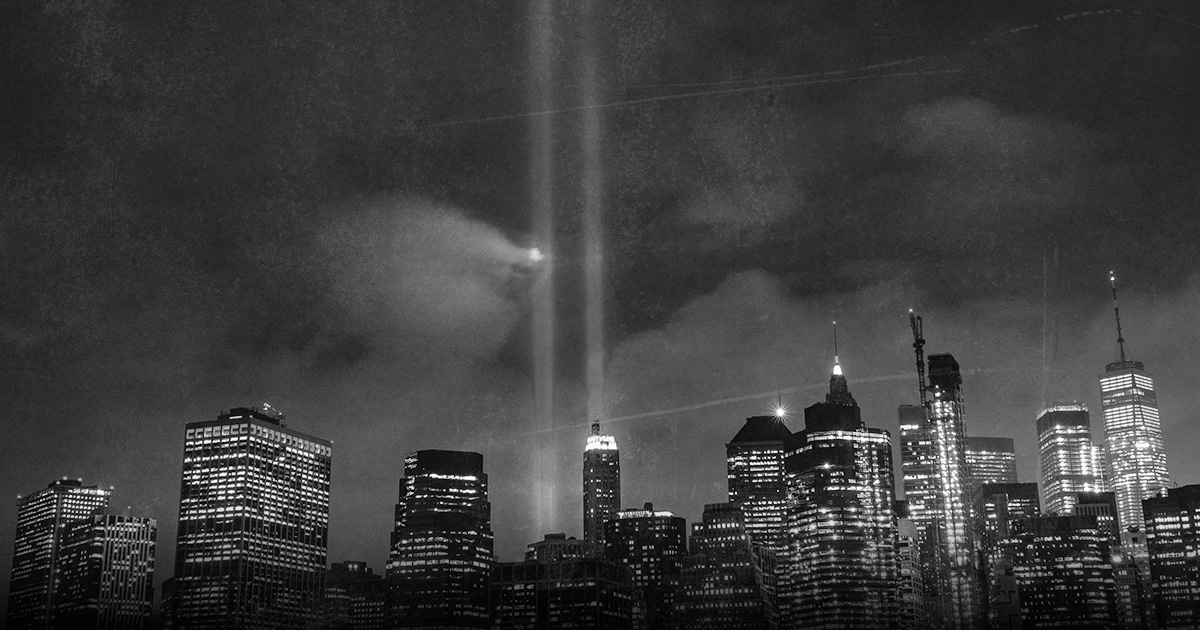
This year marks the 25th anniversary of that tragic day. We remember the men, women, and children who lost their lives, the families who said goodbye that morning without knowing it would be the last time, the first responders who rushed toward danger, and the survivors who carried wounds no one else could fully understand.
For many people, September 11 was one of those moments when the world stopped making sense.
Dr. James Dobson wrote honestly about those times in his book, When God Doesn’t Make Sense. He didn’t offer easy answers to suffering, or suggest that faith removes all pain and confusion. Instead, he pointed readers back to the truth that God can strengthen His people in seasons of confusion and deep heartache.
Dr. Dobson wrote: “A person faced with extreme hardship must press himself to get tougher. An individual in crisis will either grow stronger or become demoralized. Within certain limits, of course, adversity can have a positive effect on people by helping to build character. For Christians, Scripture says it develops and enhances that precious characteristic called faith. Could it be that our heavenly Father permits His children to struggle in order to keep us strong? I firmly believe that to be true.”
That truth does not erase grief, explain every tragedy, or lessen evil. But it reminds us that suffering does not have to be the end of the story. By God’s grace, hardship can become a place where faith grows, courage rises, and people take the next step even when they can’t see the whole path.
One man who had to do that was Adam Mayblum.
When Adam went to work on September 11, 2001, he expected a normal day at the office. Instead, he was inside the World Trade Center when the planes struck the Twin Towers. The next day, while the memories were fresh, he wrote a detailed email to friends about what had happened. That message, later known as “The Price We Pay,” spread widely because people wanted to understand what it was like to be inside those buildings.
Early in Adam’s account, he wrote that smoke was everywhere. He took off his T-shirt, soaked it in water, and gave part of it to a friend. They wrapped the wet cloth around their faces so they could breathe. Then they searched for the stairs.
What stands out is not only Adam’s fear, but his ability to keep thinking while he was terrified. His world had changed in an instant, and no one knew what would happen next. Yet he did the best he could. He looked for a way out, helped the person beside him, and took the next step.
That is often what faithfulness looks like in a crisis. It is not always a grand speech or a perfect plan. Sometimes it is simply doing the right thing with trembling hands.
As Adam and others made their way downstairs, he did not try to save only himself. He looked for coworkers, helped confused strangers into the stairwell, and kept moving with the group.
In times of suffering, people need one another. God did not design us to walk through life by ourselves, and He certainly did not intend for us to face tragedy alone. Families, church members, friends, neighbors, and even strangers can become instruments of His mercy when the way forward is dark.
Adam’s descent was slow and orderly, but his fear was very real. He later admitted that his legs were shaking and his heart was pounding. Even then, he tried to help those around him stay calm. At one point, he joked about ruining a new pair of shoes, and those nearby laughed.
That brief moment of humor did not remove the danger, but it gave everyone nearby a breath of relief amid the terror. It reminded them they were human and still together as they continued their voyage to find an exit.
When they reached the lower floors, the lights went out. Adam heard and felt a rumbling from above. He thought the staircase was collapsing. He later learned that Tower 2 was falling nearby.
In the darkness, someone had a flashlight. Since they could no longer see where they were going, Adam suggested that everyone place a hand on the shoulder of the person ahead and call out if they hit an obstacle. The plan worked.
That image is hard to forget: people in darkness, hands on shoulders, moving forward one careful step at a time.
It is also a picture of how many people endure suffering. No one can see the full road ahead or has all the answers. The darkness is real, and so is the fear. Yet by the grace of God, people can still move forward together.
Eventually, Adam and the others made it out of the building. Only after they were several blocks away did they stop and look back. Tower 1 was covered in flame and smoke. Then another rumble came. They watched in horror as it collapsed!
Adam later learned that he had been out of the building for less than 15 minutes.
When he finally arrived home, he cried with his son and held his wife until he fell asleep.
Survival meant not only getting out of a burning building. It was also meant making it home, holding the people he loved, and letting the tears finally come.
Years ago, I reached out to Adam to see what he holds onto from that experience. What he told me echoed the words of Dr. Dobson: “I have never been one to let adversity get in the way of my progress. Some of my most valuable lessons in life and business have come as a direct result of my worst experiences. 9/11 was no different. I used those experiences to redefine myself and my objectives. If used correctly, adversity yields clarity of purpose, which is a great tool for success.”
Those words do not make September 11 easier to understand or answer every question raised as a result of that tragedy. But they show that even after deep trauma, a person can continue to live with purpose.
For Christians, their purpose is not built on human strength alone. It is rooted in the character of God. We believe He is present even when life feels shattered—that He is good even when circumstances are not, and that He can bring endurance, character, and hope out of suffering, just as Scripture teaches.
The book of James tells us, “Consider it pure joy, my brothers, whenever you face trials of many kinds, because you know that the testing of your faith develops perseverance” (James 1:2-3). The Apostle Paul wrote something similar in Romans 5:3-4, reminding believers that suffering can produce perseverance, character, and hope.
These passages do not tell us to pretend pain is pleasant or to call evil good. Instead, they remind us that God is able to work through His people even when life is painful, confusing, and beyond our control.
On this 25th anniversary of September 11, we remember the lives that were lost and the families forever changed. We honor the courage shown in stairwells, offices, airplanes, streets, firehouses, hospitals, churches, and homes. We grieve for lives that were taken and give thanks for every act of bravery, kindness, and sacrifice.
We also remember this: when the world stops making sense, God has not stopped being God.
We may not receive every answer this side of heaven. We may not understand why some lives are spared, while others are not. But we can hold on to the Lord who sees all, strengthens His children and promises never to abandon us.
By His grace, we can take the next step.