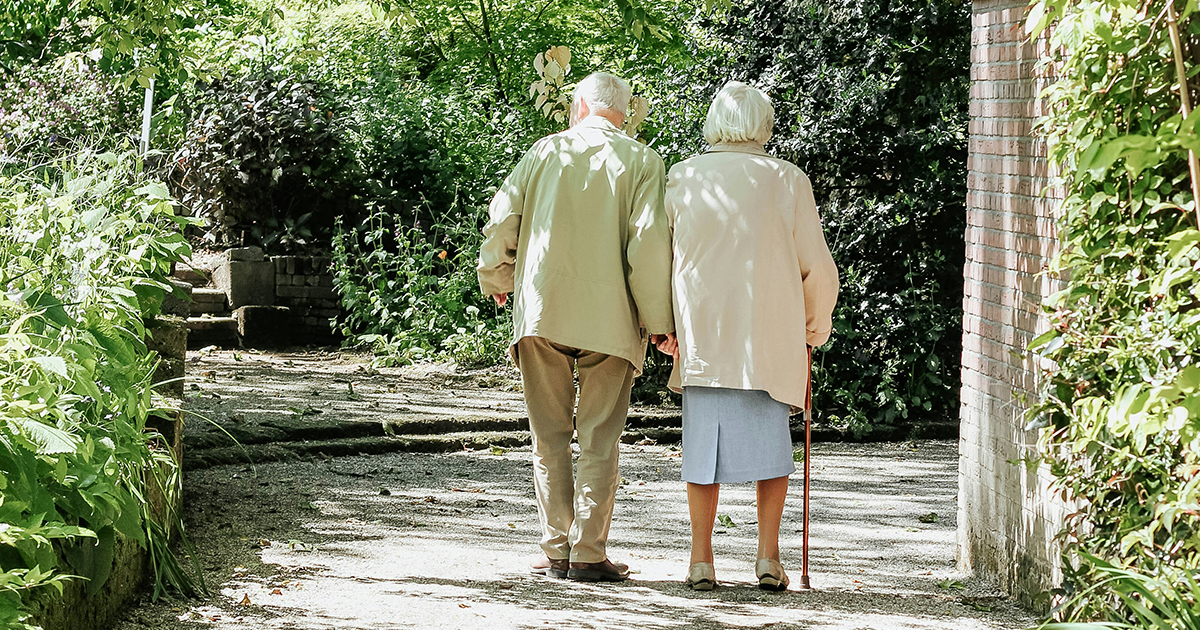
My dad suffered from Parkinson’s disease until he died at 89 years of age. He had always been a strong man, but the disease slowly took so much from him. It weakened his body, limited his abilities, and made even simple tasks harder than ever before.
I never heard my dad curse. Apparently, before Jesus saved him, he had a salty tongue, but the Lord changed him, and the man I knew as my dad did not speak that way. That is why something he said a few months before his death has stayed with me. He looked at me one day and said, “Steve, getting old is h-e-double-hockey-sticks.”
I knew he was really struggling. Then he added, “I just don’t see why the Lord hasn’t taken me home yet.”
Those words revealed something deeper than physical pain. My father was not only tired of suffering; he felt like his earthly purpose was over. He loved the Lord, believed in heaven, and seemed to think that if he could no longer do the things he once did, maybe there was no reason left to stay.
I looked at him and said, “Dad, the Lord is still using you in my life.” And I meant it.
When I was in high school, I didn’t really like my dad. In fact, I used to say I hated him. But seeing some of the hatred displayed in the world today makes me realize I never had that much disdain for him. I was angry, immature, and hurt in some ways, and so was he. Over the years, however, the Lord changed our hearts. He softened my father—and me. Even as Parkinson’s was taking so much from my dad, God was shaping me through his trial, making me more patient, tender, forgiving, and more Christlike.
That is something we must remember when we think about the elderly, especially those in nursing homes, assisted living facilities, or confined to their own homes. They still have purpose, though many can no longer see it.
Dr. James Dobson shared a moving story during a Family Talk broadcast titled “Ministering to the Elderly.” He said:
“My mother had Parkinson’s disease, and she had really kind of shrunk to about an 80-pound little frame. But a year before that, when the process hadn’t gone quite that far, my friends, Robert and Bobbie Wolgemuth, went with me to see her, and we sat on the bed and sang to her. Robert and Bobbie have great voices, and they began singing the old hymns, and my mother, who could no longer talk, began singing with them, because the ability to sing comes from the other side of the brain. She sang in alto, beautiful alto, all the words in the right place. And I sat there and bawled like a baby.”
That story says so much about the value of the elderly. Dr. Dobson’s mother could no longer communicate as she once had. Her body was frail, and her voice was mostly gone, yet when she heard hymns, something deep within her soul responded. Worship rose from a place the disease had not destroyed.
It is a beautiful reminder that the image of God does not fade with age. A person’s worth is not measured by productivity, strength, memory, mobility, or independence. Their value is given by the Lord, and therefore it remains unscathed despite difficult circumstances and the ravages of time.
The Bible says, “Gray hair is a crown of glory; it is gained in a righteous life” (Proverbs 16:31, ESV). In a culture that worships youth, beauty, speed, and usefulness, Scripture tells us to view aging differently. The elderly are not burdens to be managed or forgotten, but people to be cherished and honored.
Psalm 92:14 says of the righteous, “They still bear fruit in old age; they are ever full of sap and green” (ESV). That does not mean later years are easy. My dad would tell you plainly they are not. Nor does it mean older saints will always be productive, because many feel weak, lonely, and overlooked. Still, God says there is value in the season of old age.
The “fruit” discussed in the above Psalm may look different than it once did, but it is no less real. Bearing that fruit may come through wisdom shared with a younger generation, prayers offered from a hospital bed, worship that rises from a frail voice, or the quiet witness of a life that has followed Christ for many years. In my father’s case, some of it was seen in what God was doing in me as I learned to love him with more patience, tenderness, and grace.
One of the greatest ways we can minister to older adults is by helping them rediscover their purpose. Many can no longer serve as they once did. They may not be able to teach a class, lead a ministry, work a job, raise children, or care for others as they did for many years. But their place in the Kingdom of God has not been erased by age, illness, or weakness. They can still bless others and teach them what faithful endurance looks like. One woman in her early 90s who could no longer drive, reached out to others simply by calling them and praying for their needs on the phone. It meant so much to those whom she contacted, and it gave her a great sense of purpose despite her challenges.
If you have an elderly person in your life, especially one who feels forgotten or useless, one of the greatest gifts you can offer is your time. Sit with that individual long enough to hear what he or she wants to say. Listen to familiar stories. Sing a hymn together, read Scripture, share a meal, or ask if you can pray for a specific need. Tell that person how much God can still use him or her—even if it’s just by praying for others. Many people nearing the end of life need to hear that their days still matter.
My dad’s question, “Why am I still here?” is one many aging men and women ponder quietly. Their bodies hurt, friends have died, independence has faded, and the world can feel like it has moved on without them. A visit may seem small to you, but to someone in a nursing facility or confined at home as a “shut-in,” your presence can speak the message he or she desperately needs to hear: You are not forgotten, you are loved, and God is not finished with you.
Ministering to the elderly does not require perfect words or expertise. Often, it begins by simply showing up. Hold a hand, open the Bible, pray, let them talk, and do not be afraid of quiet moments. When possible, help them serve again by sharing your needs and asking for their prayers, or inviting them to write a note of encouragement, or asking them to share a testimony of God’s faithfulness. Even when their abilities are limited, their presence remains a gift.
We do not honor the elderly by pretending old age is easy—it often brings pain, loss, and loneliness. We honor them when we acknowledge those hardships and remind them of what is true: God still sees them, loves them, and has a purpose for their lives. My dad thought his usefulness was over, but the Lord was still working through him in my life. Perhaps an older man or woman you know needs that same reminder, and God will use that person to change you in the process.